The Process
How saline tattoo removal works
Saline removal is a slower, gentler alternative to laser. Instead of breaking down ink with heat, it uses a sterile saline solution to draw ink out of the skin over several sessions.
Consultation
We look at your tattoo or PMU brows, ask about your skin and health history, and check for anything that would affect healing, such as keloid scarring or diabetes. We may do a small patch test. You'll leave knowing roughly how many sessions to expect and what each one costs.
Saline session
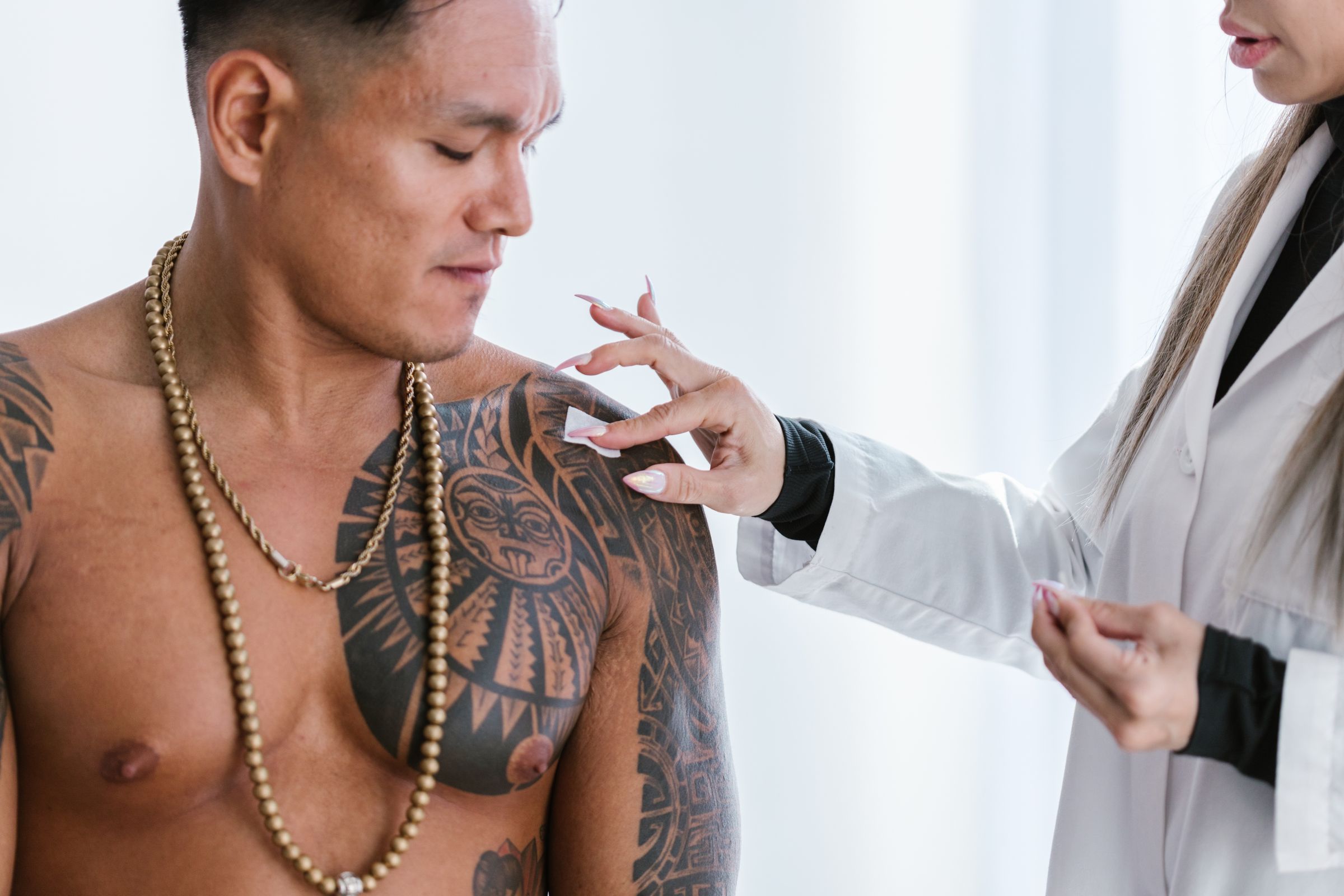
The area is cleaned with antiseptic (we don't shave it beforehand). A sterile, single-needle tattoo machine then works a saline solution along the original tattoo or PMU lines, following the pattern already in your skin. Most sessions take 30 to 90 minutes. It's normal to see ink lift onto the wipe as we work — a sign the saline is doing its job.
Healing & aftercare
The area is bandaged before you leave. Over the next few days you can expect tenderness, redness, and mild swelling, sometimes with fluid weeping — this is normal. A scab forms within the first 4 to 10 days and must be left to shed naturally; picking it affects the fade and the healing underneath.
Repeat sessions
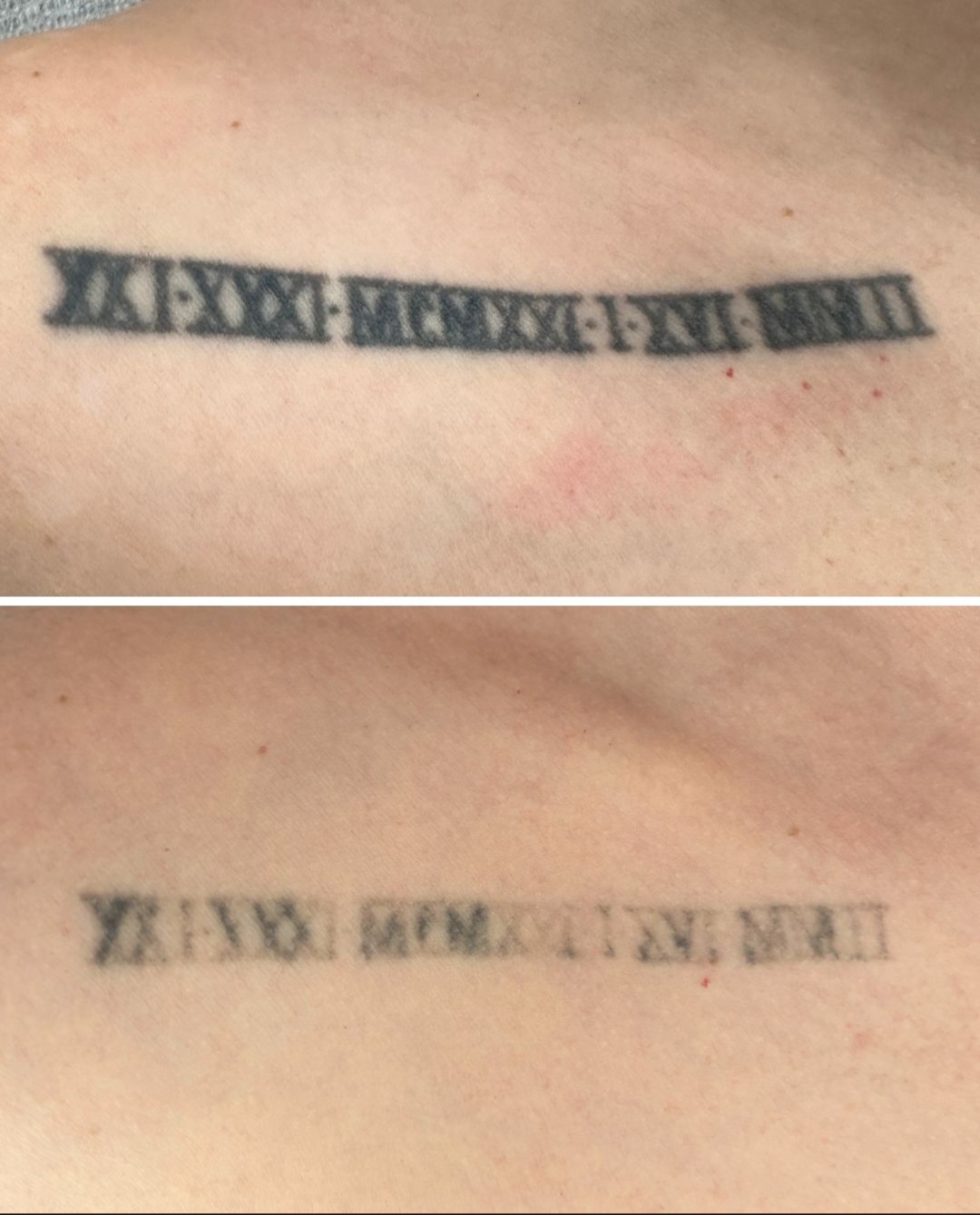
Full fading from a single session continues for 8 to 10 weeks as new skin settles. Once healed, we check progress and plan your next visit — sessions are spaced 6 to 8 weeks apart so your skin fully recovers before the next round of lifting.
The Science
Saline vs. laser: two opposite directions
Saline and laser removal don't just use different tools — they move ink in opposite directions.
Saline lifts ink up and out
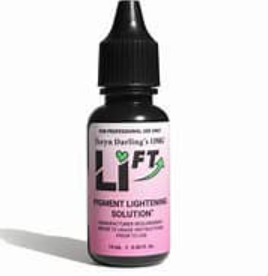
Saline solution has a much higher salt concentration than the fluid inside your skin cells. Through osmosis, your body pulls fluid out of those cells to balance the concentration — and that fluid carries trapped ink particles with it, up through the layers of skin toward the surface. The ink-laden fluid dries into a scab, which sheds naturally, taking the ink out of your body for good.
Laser pushes ink further in
A laser instead fires concentrated light energy at the ink, shattering the particles into much smaller fragments. Rather than exiting through the skin, these fragments are small enough for your immune system to absorb and carry away through the lymphatic system — deeper into the body, to be filtered out gradually by the liver over the following weeks.
That difference is why we work with saline. Because it draws ink out rather than breaking it down internally, there's no heat involved — removing the risk of burns and heat-related scarring that comes with laser. It also doesn't rely on contrast between skin tone and ink colour to work, so it's consistent across every skin tone, and it lifts colours like white, pastel, or fluorescent ink that laser often struggles to target at all.
Safety, Hygiene & Aftercare
How we keep every session safe
Safety & hygiene standards
- Sterile equipment used for every session
- Single-use, disposable needles and tools
- A full consultation and health check before every treatment
- Antiseptic cleaning of the area before and after treatment
- Gloved application throughout, in a sanitised workspace
- Aftercare instructions provided in writing after every session
When treatment may not be recommended
- You're pregnant or breastfeeding
- You have an active skin infection or broken skin over the area
- You have a history of keloid scarring
- You have uncontrolled diabetes or a blood clotting disorder
- You have certain other medical conditions affecting healing
This isn't a complete list — a consultation is required before every treatment so we can check your suitability properly.
Looking after the area between sessions
- Keep the area completely dry for the first 7 to 10 days, until any flaking has stopped
- Blot away any fluid with a clean cloth — never rub or scrub the area
- No makeup or cosmetic products on the treated area until it's fully healed
- Avoid pools, hot tubs, baths, and soaking the area in the shower
- Skip intense exercise for 48 to 72 hours to limit sweating on the area
- Once the scab has cleared naturally, a few drops of vitamin E oil can help the new skin settle
- Protect the area from direct sun exposure, ideally for as long as it stays pink or sensitive
Typical Timeline
How many sessions will I need?
Body tattoos
Depends on ink density, size, and how many colours are involved. Smaller or single-colour tattoos are usually on the lower end.
Eyebrow PMU
Depends on how much pigment was originally implanted and how deep it sits.
These are typical ranges, not guarantees — your consultation will give you a realistic estimate for your specific tattoo or brows. Saline removal is a lightening process: most clients see a significant fade rather than complete disappearance, though results vary by case.